Essay
Before a community decides what to keep, change or remove, it should understand what it has. That is a modest proposition with demanding consequences. It asks for records, inspection and patience, particularly when an old building’s future has already become an argument.
Reading the record
In a 2017 account of the Historic American Buildings Survey, the Library of Congress describes a program established in 1933. National Park Service architect Charles Peterson proposed employing out-of-work architects to document the country’s architectural inheritance. The work used measured drawings, large-format photographs and short historical reports.
The survey’s scope extended beyond distinguished houses. Fieldworkers were advised to include Native American structures, pioneers’ log cabins and buildings in old mining towns, with particular attention to places threatened with destruction. The Library’s account describes a partnership among the National Park Service, the American Institute of Architects and the Library of Congress, which preserves the collection and provides public access.
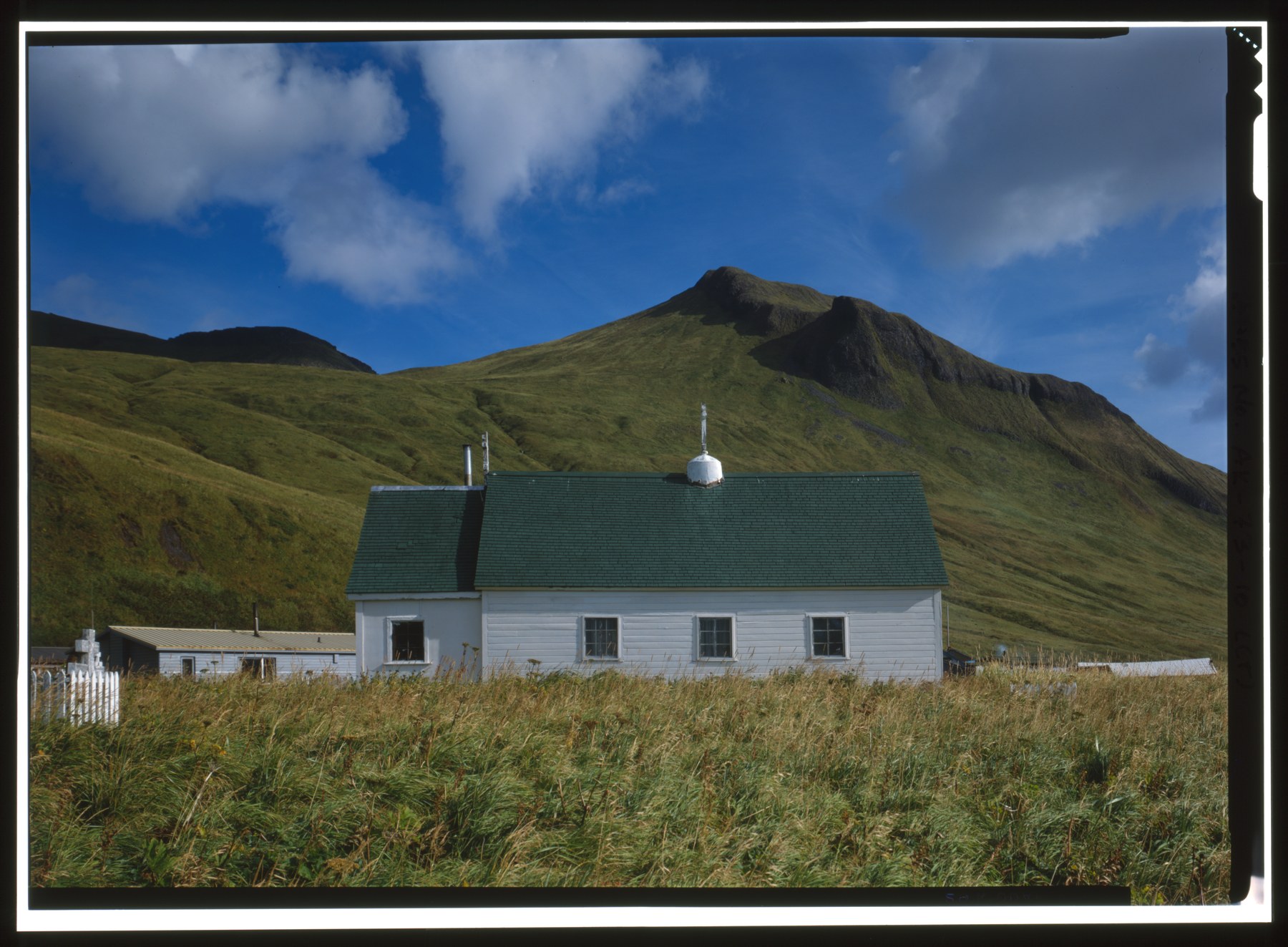
The records have practical uses. The Library notes that architects consult historical measured drawings for restoration details. Its account also illustrates the range of documented places with a photograph by Jet Lowe of St. Alexander of Nevsky Russian Orthodox Church in Alaska’s Aleutians East Borough.
Interpretation: care begins with knowledge
The lesson to draw from this record is that stewardship begins before a final verdict. A measured drawing does not require everyone to agree about a building’s future. It gives the disagreement a more reliable object. A photograph preserves a condition that may otherwise be remembered inaccurately. A short history can identify which claims are documented and which remain uncertain.
These are habits a community should value even when the eventual decision is to alter a place substantially. A proposal becomes easier to judge when residents can distinguish an original feature from a later addition, a documented use from a local legend, and a repair estimate from a guess. Those distinctions do not dictate the answer. They improve the question.
There is a moral discipline in taking ordinary buildings seriously. A place need not be a masterpiece to embody work that deserves understanding. The survey’s attention to cabins and mining towns offers an example. The people who built, occupied and adapted such places should not vanish from consideration simply because their architecture lacks grandeur.
Responsible preservation also requires proportion. Keeping a structure involves choices about safety, continued use and limited resources. A community may have good reasons to change what it inherited. Respect for the past should sharpen the explanation of those reasons and the assessment of alternatives. It should encourage people to identify what is valuable enough to carry forward.
Local organizations can put this approach to work in modest ways. Before advocating for a building, assemble its available records. Identify the source and date of photographs. Separate a resident’s recollection from a claim supported by a document. Ask qualified people to assess physical conditions. Keep the resulting material organized so the next group does not have to begin again.
Such work is less dramatic than an emergency campaign after a demolition notice. Its virtue is that it can begin while choices remain open. It can also survive a particular campaign: a carefully preserved record remains useful even when its first custodians move away or a committee dissolves.
A republic depends on people capable of taking responsibility for things they did not create and will not possess forever. The inherited street, church, workshop or public room gives that responsibility a physical form. Documenting it carefully is one way to acknowledge the work of earlier generations and to leave later generations something more dependable than our opinions.